

RAPID is an API Banking Enabler developed to securely and efficiently connect the bank’s core systems with third-party applications (fintechs, ERPs, corporate systems, and digital service providers). RAPID positions the bank at the forefront of digital transformation by enabling real-time, secure, consent-based data sharing, enhancing efficiency, creating new revenue streams, and complying with evolving regulatory requirements.
What is Rapid?
RAPID is a comprehensive API Banking Platform built to modernize how financial institutions expose and manage their services. It provides a standardized API layer for financial data and transactions, ensuring every integration is governed by customer consent, robust security, and full regulatory compliance. RAPID connects seamlessly with a bank's Core Banking System, account opening infrastructure, and any associated systems acting as the single, authoritative integration point for all digital banking activity.
Because RAPID is hosted entirely within the bank's own infrastructure, the institution retains complete control over data access and security at all times. Its architecture is built for growth, with built-in extensibility to support future services including payments, webhooks, reconciliation, and lending APIs.
Why is RAPID required?
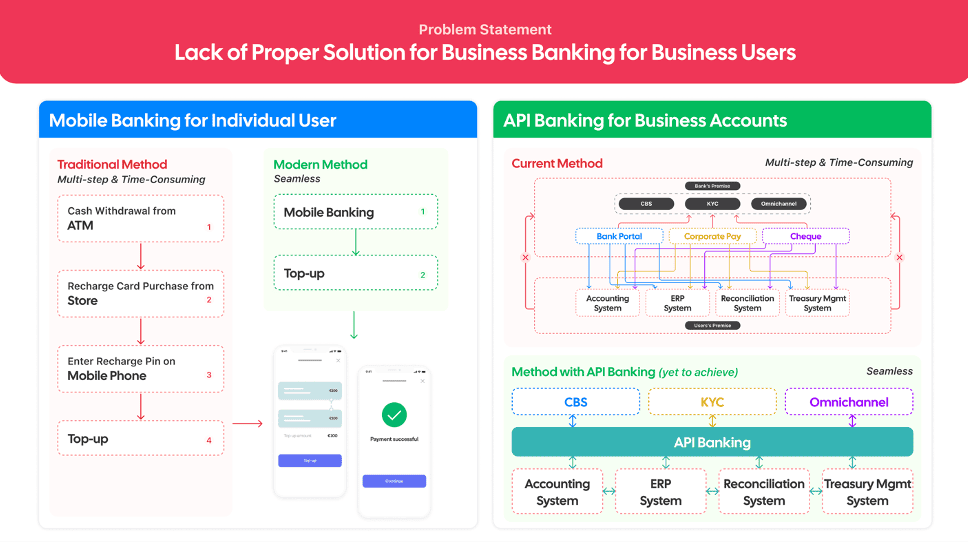
The financial services landscape is undergoing rapid digital transformation and most banks are struggling to keep pace. Businesses and retail customers now expect real-time, seamless digital experiences, yet the infrastructure behind the scenes remains fragmented, manual, and slow. There is no single platform to manage all corporate and banking transactions end-to-end, leaving a critical gap in business banking capability.
Current file-based and manual integrations are error-prone and costly. Corporate clients face long, expensive onboarding cycles, while banks lack a unified, modern solution to serve their business banking needs effectively.
These are the challenges RAPID is designed to eliminate:
RAPID directly addresses every one of these pain points:
A future-ready foundation supporting all banking products, from loan applications to automated repayments and beyond.
Click here to know more about Rapid